

Table of Contents
If you’re trying to decide between Samsung’s latest foldables, this Samsung Galaxy Z Fold 8 Ultra and Z Fold 8 comparison will help you choose the right model for your needs, budget, and usage style. Both phones run Android 17 with One UI 9, share the same Snapdragon 8 Elite Gen 5 for Galaxy chipset, and promise seven years of OS and security updates, but they diverge in display size, camera hardware, battery capacity, and overall positioning.
Below, we’ll break down design, display, performance, camera systems, AI features, battery life, pricing, and how they stack up against top rivals like the iPhone 16 Pro Max and Google Pixel 10 Pro Fold.
Design and Build: Ultra vs Standard Fold
The Galaxy Z Fold 8 Ultra and Z Fold 8 share a premium titanium-inspired frame and improved hinge design, but their physical profiles feel quite different in hand.
- Galaxy Z Fold 8 Ultra:
- Unfolded thickness: around 4.1 mm
- Folded thickness: roughly 8.9 mm
- Weight: about 215 g
- Larger, taller 6.5‑inch cover display with a more conventional phone aspect ratio
- Bigger 8.0‑inch inner display with higher resolution and a more “tablet‑like” experience.
- Galaxy Z Fold 8:
- Unfolded thickness: around 4.5 mm
- Folded thickness: roughly 9.7 mm
- Weight: about 201 g (Samsung’s lightest Fold yet)
- Smaller, squarer 5.5‑inch cover display
- Slightly smaller 7.6‑inch inner display with a 4:3 aspect ratio optimized for landscape productivity.
Both models carry an IP48 rating for dust and splash resistance and use enhanced “Flex Titanium” frames and ultra‑thin glass with anti‑reflective coating on the inner screens. The Ultra feels more like a premium, all‑day flagship, while the standard Fold 8 focuses on being lighter and easier to carry.
Display: Size, Brightness, and Usage Scenarios
Display is where the Galaxy Z Fold 8 Ultra and Z Fold 8 split most visibly.
Cover Display
- Fold 8 Ultra:
- Around 6.5 inches, Dynamic LTPO AMOLED 2X
- Tall, narrow aspect ratio similar to a normal flagship phone
- 120 Hz adaptive refresh rate, excellent for scrolling, gaming, and one‑hand use
- Fold 8:
- Around 5.5 inches, Dynamic AMOLED 2X
- More compact and slightly squarer, better for quick glances and pocketability
- Also 120 Hz, but the smaller size makes it feel more like a traditional “cover phone”
If you spend a lot of time using the phone folded, the Ultra’s bigger, taller cover screen is closer to a normal smartphone experience.
Inner Foldable Display
- Fold 8 Ultra:
- 8.0‑inch Dynamic LTPO AMOLED 2X
- Resolution around 2,504 × 2,256 (~422 ppi)
- More screen real estate for multitasking, split‑screen apps, and media consumption
- Fold 8:
- 7.6‑inch Dynamic AMOLED 2X
- Resolution around 2,448 × 1,848, with a 4:3 aspect ratio that’s great for videos, documents, and horizontal work
Both panels support 1–120 Hz adaptive refresh, HDR10+, and improved anti‑reflective coatings to reduce glare. The Ultra’s extra diagonal inches and higher pixel count make it preferable for heavy multitaskers, designers, and anyone who treats the inner screen like a mini‑tablet.
Performance and Software Support
Under the hood, the Galaxy Z Fold 8 Ultra and Z Fold 8 are nearly identical in raw power.
- Chipset: Qualcomm Snapdragon 8 Elite Gen 5 for Galaxy (custom‑tuned for Samsung)
- CPU/GPU: Octa‑core configuration with very high clock speeds and an Adreno 840‑class GPU
- RAM: 12 GB standard, with Ultra offering up to 16 GB in higher variants
- Storage: 256 GB / 512 GB / 1 TB options, UFS 4.0‑class speeds
In real‑world use, both phones handle heavy multitasking, 4K video editing, gaming, and AI workloads with ease. The Ultra’s extra RAM headroom in top configurations helps if you regularly keep many apps and browser tabs open on the large inner display.
Software and Update Commitment
Both devices launch with:
- Android 17
- One UI 9
- Seven years of OS version updates and security patch
This long support window is crucial for a premium foldable. It means your Galaxy Z Fold 8 Ultra and Z Fold 8 should remain secure and feature‑rich well into the early 2030s, which improves resale value and justifies the high upfront cost.
Samsung’s One UI 9 also adds deeper Galaxy AI integration, including:
- Now Brief: A personalized overview of your day (weather, schedule, notifications) visible from FlexWindow on the cover display.
- Now Nudge: Agentic AI that suggests when to open Multi Window, add calendar events from messages, or start a workflow based on context.
- Gemini Notebook: Summarize PDFs or audio recordings, then transform them into slides, podcasts, quizzes, or short videos directly on the device.
These features are designed specifically for foldables, where you have more screen space to work with multiple windows and AI‑generated content side by side.
Camera Systems: Deep Dive into Hardware and AI
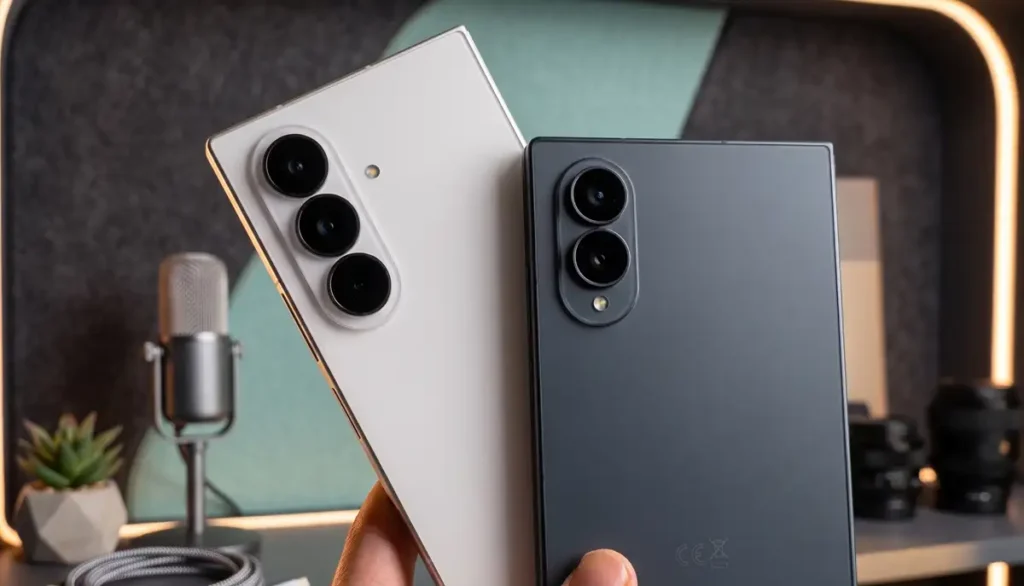
Camera capability is one of the biggest differentiators in the Galaxy Z Fold 8 Ultra and Z Fold 8 comparison.
Rear Camera Hardware
Galaxy Z Fold 8 Ultra:
- Main camera:
- 200 MP wide sensor, f/1.7 aperture
- OIS + PDAF, 1/1.3″ sensor size, 0.6 µm pixels
- Supports up to 8K @ 30 fps and 4K @ 120 fps video
- 2× optical‑quality in‑sensor zoom via pixel
- Ultra‑wide:
- 50 MP, f/1.9 aperture, 120° field of view
- 4K @ 60 fps video, significant upgrade over older 12 MP ultra‑wide
- Telephoto:
- 10 MP, f/2.4, 3× optical zoom, OIS
- Up to 30× Space Zoom (digital)
- 4K @ 60 fps videopcmag+2
Galaxy Z Fold 8:
- Main camera:
- 200 MP wide sensor, f/1.7 aperture, OIS + PDAF (same core sensor as Ultra)
- Similar 8K/4K video capabilities
- Ultra‑wide:
- 50 MP, f/1.9, 120° FOV, 4K @ 60 fps
- Matches the Ultra’s ultra‑wide spec in most respects
- Telephoto:
- None – this is the critical difference
- You rely on digital zoom from the 200 MP sensor (2× optical‑quality crop, then digital beyond that)
Front cameras on both models:
- Cover display: ~10 MP, f/2.2, up to 4K @ 60 fps
- Inner display: ~10 MP, f/2.2, wider FOV, also up to 4K @ 60 fps
Camera Software and AI Enhancements
Both phones benefit from Samsung’s ProVisual Engine and Galaxy AI features:
- Nightography improvements: Better noise reduction and detail retention in low light, especially on the 200 MP main sensor.
- AI‑enhanced zoom: Multi‑frame processing and super‑resolution algorithms help retain detail at 10× and beyond.
- Portrait and video enhancements: AI subject separation, background blur refinement, and stabilized video even while walking.
The Ultra gains extra value from its dedicated 3× telephoto lens, which is ideal for:
- Portraits with natural compression
- Mid‑range zoom (3–10×) where digital zoom starts to soften images
- Travel, events, and situations where you can’t get physically closer
If you’re serious about photography or shoot a lot of social content, the Galaxy Z Fold 8 Ultra and Z Fold 8 difference in telephoto hardware can be a deal‑breaker.
Battery Life and Charging: Galaxy Z Fold 8 Ultra and Z Fold 8 Battery
Battery endurance has been a historical weak point for foldables, but the Galaxy Z Fold 8 Ultra and Z Fold 8 battery story is much improved thanks to silicon‑carbon cells and better power management.
- Fold 8 Ultra:
- 5,000 mAh silicon‑carbon battery
- Rated for around 14 hours 9 minutes in standardized web‑browsing/video
- Fold 8:
- 4,800 mAh silicon‑carbon battery
- Around 12 hours 20 minutes in similar
Both support:
- 45W wired fast charging
- 20W wireless charging
- Reverse wireless charging for accessories
Real‑world usage shows the Ultra comfortably lasting a full day of heavy use (multitasking on the inner display, navigation, camera, and some gaming), while the standard Fold 8 is more “one solid day” with moderate to heavy use. If you frequently use the big inner screen for long sessions, the Ultra’s extra capacity and slightly better efficiency are noticeable.
Galaxy Z Fold 8 Ultra and Z Fold 8 AI Features
AI is a core part of Samsung’s pitch for these devices, and the Galaxy Z Fold 8 Ultra and Z Fold 8 AI features are deeply integrated into daily workflows.
Key AI capabilities include:
- Galaxy AI Running Coach & Health Insights (via Samsung Health integration):
- While primarily a phone, the Fold can pair with Galaxy Watch data to provide AI‑driven training plans, recovery suggestions, and form feedback.
- Now Brief & Now Nudge:
- Now Brief gives a glanceable summary of your day on the cover display, including meetings, weather, and important notifications.
- Now Nudge uses agentic AI to detect when you might want to multitask – for example, opening Calendar and Maps when you tap a dinner plan in Messages.
- Gemini Notebook & Content Creation:
- Upload a meeting recording or PDF minutes and get an AI summary.
- Convert that summary into slides, short videos, podcasts, or quizzes – all optimized for the large inner display where you can edit and preview side by side.
- Camera AI:
- Nightography, super‑resolution zoom, object eraser, and generative edit tools that let you reposition or extend elements in photos.
- My FanCam and similar features that automatically track and reframe subjects for vlogs and social clips.
These features make the Galaxy Z Fold 8 Ultra and Z Fold 8 more than just big‑screen phones; they’re designed as portable AI workstations.
Full Specs: Samsung Galaxy Z Fold 8 Ultra and Z Fold 8 Specs
Here’s a compact spec rundown for the Samsung Galaxy Z Fold 8 Ultra and Z Fold 8 Specs:
Common specs:
- OS: Android 17, One UI 9
- Chipset: Snapdragon 8 Elite Gen 5 for Galaxy
- RAM: 12 GB (Ultra up to 16 GB in top variants)
- Storage: 256 GB / 512 GB / 1 TB
- Rear main: 200 MP, f/1.7, OIS, 8K video
- Ultra‑wide: 50 MP, f/1.9, 120° FOV
- Front: 10 MP (cover) + 10 MP (inner)
- Connectivity: 5G, Wi‑Fi 7, BT 5.x, NFC, UWB
- Updates: 7 years OS + security
Fold 8 Ultra:
- Inner display: 8.0″, 2,504 × 2,256, LTPO 1–120 Hz
- Cover display: 6.5″, tall aspect ratio
- Battery: 5,000 mAh, 45W wired, 20W wireless
- Telephoto: 10 MP, 3× optical zoom, OIS
- Weight: ~215 g, thickness ~4.1 mm unfolded
Fold 8:
- Inner display: 7.6″, 2,448 × 1,848, 4:3, 120 Hz
- Cover display: 5.5″, more compact
- Battery: 4,800 mAh, 45W wired, 20W wireless
- Telephoto: None (digital zoom only)
- Weight: ~201 g, thickness ~4.5 mm unfolded
Galaxy Z Fold 8 Ultra and Z Fold 8 vs iPhone 16 Pro Max vs Pixel 10 Pro Fold
To understand value, it helps to compare the Galaxy Z Fold 8 Ultra and Z Fold 8 against similarly priced flagships. We’ll focus on two top rivals: iPhone 16 Pro Max and Google Pixel 10 Pro Fold.
Key Specs and Price Comparison
| Feature | Galaxy Z Fold 8 Ultra | Galaxy Z Fold 8 | iPhone 16 Pro Max | Pixel 10 Pro Fold |
|---|---|---|---|---|
| Display (main) | 8.0″ Dynamic LTPO AMOLED, 2,504×2,256, 120 Hz | 7.6″ Dynamic AMOLED, 2,448×1,848, 120 Hz | 6.9″ OLED, ~2,868×1,320, 120 Hz | ~7.6–8″ foldable OLED, 120 Hz |
| Cover/outer display | 6.5″ tall OLED | 5.5″ compact OLED | 6.9″ (single screen) | Outer ~6.4″ OLED |
| Chipset | Snapdragon 8 Elite Gen 5 | Snapdragon 8 Elite Gen 5 | Apple A18 Pro | Google Tensor G6 |
| RAM | 12–16 GB | 12 GB | 8 GB | 12–16 GB (varies) |
| Storage | 256 GB–1 TB | 256 GB–1 TB | 256 GB–1 TB | 256 GB–1 TB |
| Main camera | 200 MP + 50 MP UW + 10 MP 3× tele | 200 MP + 50 MP UW (no tele) | 48 MP + 48 MP + 12 MP triple | High‑res triple system |
| Battery | 5,000 mAh | 4,800 mAh | ~4,685 mAh | ~4,850 mAh |
| Charging | 45W wired, 20W wireless | 45W wired, 20W wireless | ~20–27W wired, ~25W wireless | Similar fast charging |
| OS | Android 17, One UI 9 | Android 17, One UI 9 | iOS 18 | Android 17, Pixel UI |
| Update support | 7 years | 7 years | ~6–7 years typical | 7 years |
| Approx. price (base) | ~$2,099 / ₹2,19,999 | ~$1,899 / ₹1,79,999 | ~$1,199–$1,599 | ~$1,499+ |
How They Compare
- Versus iPhone 16 Pro Max:
- The iPhone is cheaper, more compact, and has a best‑in‑class single‑screen OLED, but it lacks a foldable display.
- The Galaxy Z Fold 8 Ultra and Z Fold 8 give you tablet‑sized screens, superior multitasking, and more flexible productivity workflows.
- iPhone still leads in app ecosystem polish and long‑term resale value in some regions, but Samsung matches it on update commitment.
- Versus Pixel 10 Pro Fold:
- Pixel 10 Pro Fold offers clean Android, excellent computational photography, and deep Google AI integration, but is heavier and often has shorter battery life in tests.
- Samsung’s Galaxy Z Fold 8 Ultra and Z Fold 8 have better battery endurance (especially the Ultra), brighter displays, and more mature multitasking features in One UI.
- Pixel may appeal to pure‑Android fans and photographers who prefer Google’s processing, while Samsung wins on hardware polish and screen size options.
Samsung Galaxy Z Fold 8 Ultra and Z Fold 8 Price and Variants
Pricing varies by region, but current global and India‑focused data shows:
- Galaxy Z Fold 8 Ultra:
- Starting around $2,099 / £1,899 / ₹2,19,999 for 256 GB
- Higher variants (512 GB / 1 TB, 16 GB RAM) go above $2,300 / ₹2,40,000+
- Galaxy Z Fold 8:
- Starting around $1,899 / £1,699 / ₹1,79,999 for 256 GB
- 512 GB and 1 TB options add a few hundred dollars/rupees
Pre‑order and launch offers in India, the US, and Europe often include:
- Bonus storage upgrades
- Trade‑in discounts on older Galaxy or other flagship phones
- Free or discounted Galaxy Buds / Watch
Given the Samsung Galaxy Z Fold 8 Ultra and Z Fold 8 Price, these are clearly premium devices aimed at power users, creators, and professionals who can leverage the large screens and AI tools daily.
Who Should Buy Which Model?
Choose the Galaxy Z Fold 8 Ultra if:
- You want the largest, highest‑resolution inner display for serious multitasking, reading, and media.
- You care about telephoto photography and want a dedicated 3× optical zoom lens.
- Battery life is critical and you often use the big screen for long stretches.
- You’re comfortable paying a premium for the “best of everything” in Samsung’s foldable lineup.
Choose the Galaxy Z Fold 8 if:
- You want a lighter, more pocketable foldable that still feels like a flagship.
- You mostly use the inner display for occasional media, documents, and light multitasking.
- You’re okay relying on digital zoom instead of a dedicated telephoto camera.
- You want the Fold experience at a slightly lower entry price.
For many users, the decision comes down to camera zoom needs, how much you value that extra half‑inch to one inch on the inner display, and whether the Ultra’s battery and RAM headroom justify the extra cost.
FAQs: Samsung Galaxy Z Fold 8 Ultra and Z Fold 8
The Ultra has a larger 8.0‑inch inner display, a dedicated 3× telephoto camera, a bigger 5,000 mAh battery, and slightly more premium build, while the standard Fold 8 is lighter, smaller, and lacks a telephoto lens.
No. The standard Fold 8 relies on its 200 MP main sensor and digital zoom; only the Fold 8 Ultra includes a 10 MP 3× optical telephoto lens.
In standardized tests, the Ultra lasts around 14 hours 9 minutes and the Fold 8 around 12 hours 20 minutes, both significantly better than previous‑gen Folds. Real‑world use typically gives a full day or more depending on screen usage.
Yes. Both include Now Brief, Now Nudge, Gemini Notebook, AI‑enhanced camera tools (Nightography, super‑resolution zoom, generative edits), and deeper integration with Samsung Health and productivity apps.
The Fold 8 and Fold 8 Ultra are significantly more expensive than the iPhone 16 Pro Max but offer foldable screens and tablet‑like productivity. They’re broadly in the same premium bracket as the Pixel 10 Pro Fold, with Samsung leading in battery life and display size.
Yes. Both the Galaxy Z Fold 8 Ultra and Z Fold 8 come with seven years of OS version updates and security patches, matching or exceeding most competitors.
If you heavily use the inner display, need a telephoto camera, and want maximum battery life and RAM headroom, the Ultra is worth it. If you want a lighter, more affordable foldable and can live without a telephoto lens, the standard Fold 8 is excellent value.
Conclusion: Which Foldable Wins in 2026?
The Samsung Galaxy Z Fold 8 Ultra and Z Fold 8 represent two clear paths within the same family. The Fold 8 Ultra is the no‑compromise, productivity‑first flagship with a bigger, sharper screen, a complete triple‑camera system, and the longest battery life in the lineup. The standard Fold 8 is lighter, slightly cheaper, and still extremely capable, but it skips the telephoto lens and trims a bit of screen size and battery capacity.
Against rivals like the iPhone 16 Pro Max and Pixel 10 Pro Fold, the Galaxy Z Fold 8 Ultra and Z Fold 8 stand out for their unique combination of massive foldable displays, strong AI integration, and long software support. If your workflow benefits from tablet‑like screens, advanced multitasking, and on‑device AI content creation, either Fold 8 model is a compelling choice – with the Ultra being the obvious pick for those who want the absolute best.
Also Read: Samsung Galaxy Z Fold 7: In Depth Features, Review, Specs & Price