

Table of Contents
Smartphone buyers in 2026 are spoilt for choice, and two of the most camera‑focused flagships right now are the Vivo X300 Pro and Oppo Find X9 Pro. Add the upcoming Xiaomi 17 Ultra into the mix, and the decision becomes even tougher, especially for users in the USA, India and Europe. This guide dives deep into Vivo X300 Pro vs Oppo Find X9 Pro with a special focus on cameras, battery, software support and long‑term value, and also shows how Xiaomi 17 Ultra sits in between.
Key specs at a glance
Before going into the detailed sections, here is the high‑level comparison between Vivo X300 Pro vs Oppo Find X9 Pro vs Xiaomi 17 Ultra.
Design and displays
Premium build and ergonomics
- Vivo X300 Pro goes with a premium glass/metal sandwich and ZEISS‑branded camera island, designed clearly to look like a professional camera module. It remains relatively slim considering its large 6510 mAh battery in the Chinese/global variant.
- Oppo Find X9 Pro pushes a slightly bolder camera bump with Hasselblad branding and smooth curves that make it feel a bit more sculpted in hand.
- Xiaomi 17 Ultra uses a large rectangular Leica camera island, plus a subtle curve and very high‑end materials; the unique physical zoom ring around the camera (on some variants) reinforces the camera‑first identity.
Display quality
All three phones target flagship‑class displays, but there are nuances that matter if Vivo X300 Pro vs Oppo Find X9 Pro screen quality is a priority.
- Vivo X300 Pro:
- Oppo Find X9 Pro:
- Xiaomi 17 Ultra:
Verdict on display: All three are top tier; Xiaomi 17 Ultra wins on size and resolution, while Vivo X300 Pro vs Oppo Find X9 Pro are very close, with minor differences you will not notice day‑to‑day.
Performance, Storage and Connectivity
Chipsets and raw performance
- Vivo X300 Pro and Oppo Find X9 Pro share the same MediaTek Dimensity 9500 (3 nm) flagship chipset, giving very similar CPU and GPU performance in synthetic benchmarks and real‑world use.
- Xiaomi 17 Ultra uses Qualcomm Snapdragon 8 Elite Gen 5, which has a slight edge in peak GPU performance, AI throughput and gaming optimisation.
For Vivo X300 Pro vs Oppo Find X9 Pro performance, both are effectively neck‑and‑neck; heavy multitasking, high‑refresh gaming and 4K video recording are smooth on each.
RAM, storage and connectivity
- All three offer up to 16 GB LPDDR5X RAM and up to 1 TB UFS 4.0/4.1 storage, with mainstream global variants commonly at 16/512 GB.
- 5G (SA/NSA), Wi‑Fi 6 or better, NFC, in‑display fingerprint sensors and stereo speakers are standard across the board.
If you care about raw gaming and emulator performance, Xiaomi 17 Ultra’s Snapdragon 8 Elite Gen 5 gives a slight edge; otherwise, Vivo X300 Pro vs Oppo Find X9 Pro feel equally fast for everyday tasks.
Camera deep‑dive: Vivo X300 Pro vs Oppo Find X9 Pro camera vs Xiaomi 17 Ultra
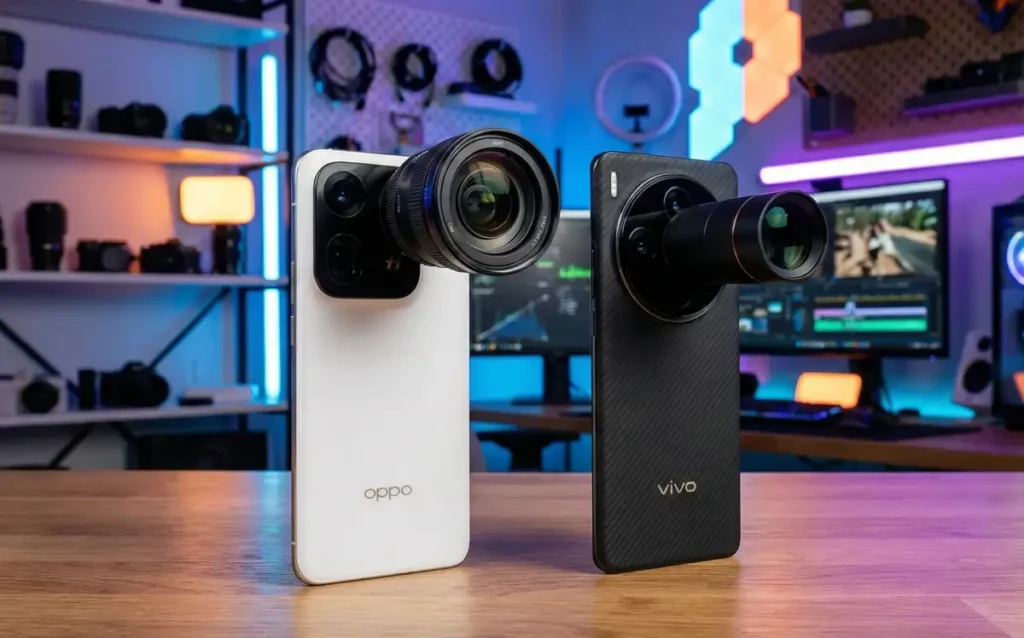
This is where things get really interesting. All three phones are camera‑centric, but their tuning, optics and extras differ.
Rear camera hardware
Vivo X300 Pro camera setup:
- 50 MP main, Sony LYT‑828, f/1.57, OIS
- 50 MP ultra‑wide, f/2.0, AF
- 200 MP ZEISS APO periscope telephoto, large 1/1.4″ class sensor, OIS, ~3.7x optical zoom, long‑range high‑quality digital zoom
- Dual imaging chips: V3+ and VS1 for pre‑/post‑processing, boosting detail and low‑light performance.
Oppo Find X9 Pro camera setup:
- 50 MP main, Sony LYT‑828 1/1.28″, f/1.5, OIS
- 50 MP ultra‑wide, f/2.0, 120° FOV, AF
- 200 MP Hasselblad Ultra‑Clear telephoto, OIS, up to 13.2x lossless and 120x AI zoom
- 2 MP monochrome sensor
- Tuned with Hasselblad colour science and triple‑exposure HDR.
Xiaomi 17 Ultra camera setup (Leica):
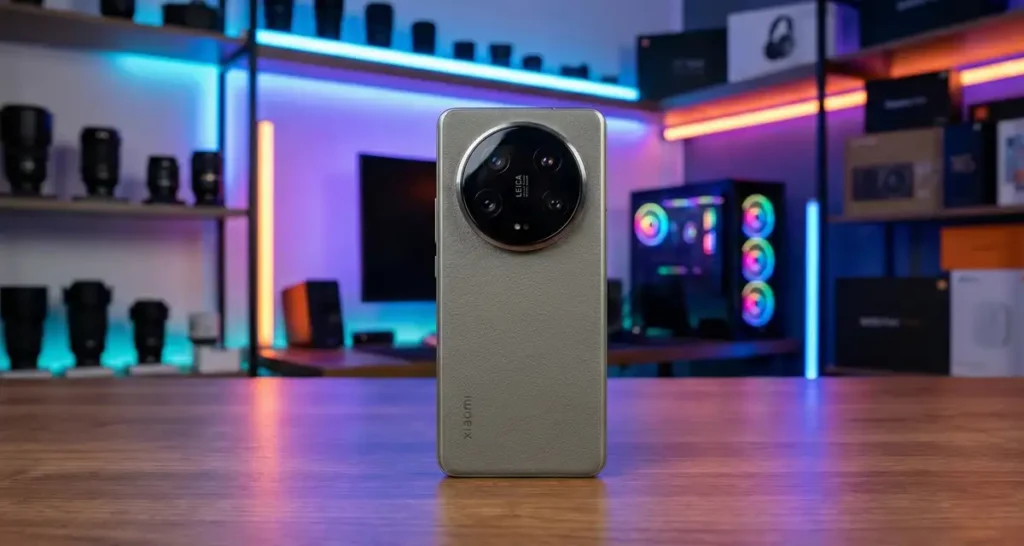
- 50 MP main, customised 1‑inch OmniVision sensor with OIS
- 50 MP ultra‑wide, Samsung JN5
- 200 MP periscope telephoto (Samsung HPE) with continuous optical zoom (~3x–4.3x) and up to 120x digital zoom
- Leica lenses, Leica colour modes (Authentic, Vibrant) and advanced Pro tools.
Photo quality: day and night
From early lab tests and reviews, this is how Vivo X300 Pro vs Oppo Find X9 Pro camera performance stacks up.
- Vivo X300 Pro:
- Delivers extremely clean images with low noise, even in complex HDR scenes, thanks to the dual imaging chips and computational photography pipeline.
- The 200 MP ZEISS APO telephoto retains excellent detail at long focal lengths; telephoto portraits look natural with controlled chromatic aberration.
- Colour science leans slightly natural with a ZEISS flavour; portrait bokeh is among the most realistic in its class.
- Oppo Find X9 Pro:
- The 50 MP main camera with LYT‑828, wide f/1.5 aperture, and triple‑exposure HDR produces bright, high‑dynamic‑range shots with rich contrast.
- The 200 MP Hasselblad telephoto offers dramatic reach (13.2x “lossless”, up to 120x digitally), great for wildlife, distant cityscapes and moon shots.
- Hasselblad colour tuning gives warmer, punchier tones that many casual shooters will find immediately appealing.
- Xiaomi 17 Ultra:
- The 1‑inch main sensor delivers class‑leading dynamic range and shallow depth of field, closer to compact cameras than typical phones.
- Leica colour modes give either a cinematic, contrasty look or a more vibrant style, with great detail preservation.
- The periscope telephoto with continuous zoom yields smooth framing between ~3x–4.3x and very usable zoom up to 10x–15x.
If your main deciding factor is Vivo X300 Pro vs Oppo Find X9 Pro Camera, the Vivo edges ahead for natural‑looking portraits and low‑noise night shots, while Oppo wins in ultra‑long zoom reach and punchy character. Xiaomi 17 Ultra stands out when you want the most “camera‑like” rendering and advanced Leica Pro features.
Video recording
- Vivo X300 Pro:
- Oppo Find X9 Pro:
- Xiaomi 17 Ultra:
For advanced creators, Vivo X300 Pro vs Oppo Find X9 Pro both deliver strong options; Vivo’s 10‑bit Log and portrait video tools favour serious content creators, while Oppo’s Dolby Vision with very stable 4K 120 fps is excellent for action and travel vlogging.
Selfie cameras
- Vivo X300 Pro: 50 MP AF front camera, wide FOV, tuned for natural skin tones and strong detail retention.
- Oppo Find X9 Pro: 50 MP AF front camera, narrow but flattering field of view, with strong HDR for backlit selfies.
- Xiaomi 17 Ultra: 32 MP AF front camera, still very good but not as high‑resolution as the other two.
If you are a selfie‑heavy user, Vivo X300 Pro vs Oppo Find X9 Pro Camera front‑facing performance is extremely similar, and both are better than Xiaomi 17 Ultra on paper.
Battery Life and Charging
Battery performance is another key dimension in comparing Vivo X300 Pro vs Oppo Find X9 Pro battery, along with Xiaomi 17 Ultra.
Battery capacity
- Vivo X300 Pro:
- 6510 mAh in China/global, 5440 mAh in some European variants.
- Oppo Find X9 Pro:
- Around 7500 mAh class battery as per early specs and long‑term tests, making it one of the biggest batteries in mainstream flagships.
- Xiaomi 17 Ultra:
- 6800–7000 mAh, depending on variant, giving a balance between Oppo’s huge pack and Vivo’s more compact design.
Charging speeds
- Vivo X300 Pro: 90 W wired, 40 W wireless, plus reverse wireless charging; a full charge typically takes around 30–40 minutes.
- Oppo Find X9 Pro: ~100 W wired fast charging with fast wireless charging as well (often 50 W+ depending on region).
- Xiaomi 17 Ultra: 100 W wired, 80 W wireless, and 10 W reverse wireless, which is one of the most complete charging setups on any phone.
In practical use, Oppo Find X9 Pro delivers the longest battery life thanks to its massive pack, while Vivo X300 Pro vs Oppo Find X9 Pro battery fast‑charge performance is close with Oppo having a small edge. Xiaomi 17 Ultra balances capacity and extremely fast wired and wireless charging, making it ideal for power users.
Software, updates and long‑term support
Out‑of‑box software
- Vivo X300 Pro ships with Android 16 skinned with OriginOS in China and Funtouch OS globally, adding extensive camera controls and customisation features.
- Oppo Find X9 Pro runs Android 16 with ColorOS, which is feature‑rich, fluid, and has deep integration with Hasselblad camera modes.
- Xiaomi 17 Ultra includes Android 16 with HyperOS 3, focusing on cross‑device integration and a big set of Leica camera tools.
Update policies (Vivo X300 Pro vs Oppo Find X9 Pro Software support)
Official announcements and brand patterns suggest:
- Vivo X300 Pro: 4 major Android updates and 5 years of security patches are expected in global markets, aligning with Vivo’s current flagship policy.
- Oppo Find X9 Pro: Oppo has committed up to 4 Android updates and 5 years of security updates for its latest flagships, so X9 Pro should receive similar support.
- Xiaomi 17 Ultra: Xiaomi’s recent Ultra flagships offer at least 4 major OS updates and 5 years of security patches, and 17 Ultra is expected to follow that path.
For Vivo X300 Pro vs Oppo Find X9 Pro Software support, both look strong if you plan to keep the phone for 4–5 years, with Xiaomi 17 Ultra matching them.
Pricing and availability (USA, India, Europe)
Pricing varies a lot by region, but this section focuses on Vivo X300 Pro vs Oppo Find X9 Pro Price and where Xiaomi 17 Ultra fits.
Europe
- Vivo X300 Pro price (Europe):
- Officially set at €1,399 for 16 GB RAM + 512 GB storage.
- Oppo Find X9 Pro price (Europe):
- Xiaomi 17 Ultra price (China, extrapolated to EU):
- 12/512 GB: RMB 6999, 16/512 GB: RMB 7499, 16/1 TB: RMB 8499, which roughly converts to €900–1,100 before taxes for base versions.
India
- Vivo X300 Pro price in India:
- Around ₹1,09,999 for the 16/512 GB configuration at launch.
- Oppo Find X9 Pro price in India:
- Expected around or slightly below Vivo’s pricing, often in the ₹95,000–₹1,05,000 bracket depending on offers.
- Xiaomi 17 Ultra price in India:
- Expected to land in the premium bracket, around or slightly above Xiaomi 14 Ultra levels, likely in ₹90,000–₹1,05,000 for higher variants.
USA and global imports
- Neither Vivo nor Oppo operate widely in the US carrier market, so Vivo X300 Pro vs Oppo Find X9 Pro Price in the US mainly reflects import store rates.
- Typical online listings show:
- Vivo X300 Pro around $1,400–$1,600 equivalent for the 16/512 GB model.
- Oppo Find X9 Pro around $1,300–$1,500 depending on retailer, with some deals going lower.
- Xiaomi 17 Ultra, based on Chinese price of RMB 6999, converts to around $950–$1,050 before duties; global prices may be higher depending on region.
In short, Xiaomi 17 Ultra often undercuts the other two, while Oppo Find X9 Pro is usually slightly cheaper than Vivo X300 Pro at similar storage levels.
Detailed specs: Vivo X300 Pro vs Oppo Find X9 Pro vs Xiaomi 17 Ultra
Here is a more detailed Vivo X300 Pro vs Oppo Find X9 Pro Specs comparison, plus Xiaomi 17 Ultra.
Which one should you buy?
This is the core question: Vivo X300 Pro vs Oppo Find X9 Pro – which should you buy, and when does Xiaomi 17 Ultra make more sense?
Buy Vivo X300 Pro if…
- You prioritise natural‑looking photos and portraits with excellent low‑light performance and minimal noise.
- You want one of the best telephoto cameras with ZEISS APO optics and powerful dual imaging chips.
- You value a slightly more conservative but refined design and stable software with strong Vivo X300 Pro vs Oppo Find X9 Pro Software support.
Buy Oppo Find X9 Pro if…
- You love vivid, punchy colours and dramatic ultra‑zoom shots (up to 120x) with Hasselblad tuning.
- Battery life is your top priority: its huge battery can push 2–3 days for moderate users.
- You prefer ColorOS features and Oppo’s ecosystem over Vivo or Xiaomi.
Consider Xiaomi 17 Ultra if…
- You want the most “camera‑like” experience with a 1‑inch Leica‑branded main sensor and continuous telephoto zoom.
- You care deeply about 8K video, advanced Pro/RAW tools and a slightly stronger Snapdragon 8 Elite Gen 5 platform.
- You want fast 100 W wired and 80 W wireless charging plus reverse charging in one package.
If your focus keyword is strictly Vivo X300 Pro vs Oppo Find X9 Pro, the simple breakdown is: pick Vivo X300 Pro for camera purity and ZEISS optics, and pick Oppo Find X9 Pro for battery endurance and Hasselblad‑styled, high‑zoom photography.
FAQ: Vivo X300 Pro vs Oppo Find X9 Pro
Both are excellent; Vivo X300 Pro is better for natural portraits and low‑noise night shots, while Oppo Find X9 Pro excels at ultra‑long zoom and punchy colours.
Xiaomi 17 Ultra offers a larger 1‑inch main sensor and Leica tuning, giving it the most “DSLR‑like” character, especially in dynamic range and background blur.
Oppo Find X9 Pro’s larger battery generally lasts noticeably longer than Vivo X300 Pro, especially for heavy users, though both support very fast charging.
Yes. Both use the Dimensity 9500, which easily handles 120 Hz gaming and sustained performance, though the Snapdragon‑based Xiaomi 17 Ultra has a slight edge in some titles.
All three brands now commit to around 4 major Android updates and 5 years of security patches, so you are well covered for long‑term use.
Oppo Find X9 Pro typically launches slightly cheaper than Vivo X300 Pro at similar storage levels, while Xiaomi 17 Ultra often undercuts both on early deals.
Importing is viable for enthusiasts, but check 5G band support, warranty limitations and extra costs; Xiaomi 17 Ultra generally offers the best performance‑to‑price ratio among the three.
Also Read: