

Table of Contents
Vivo’s X300 Pro is not just another spec-heavy flagship; it is one of the most camera‑driven phones of 2025, built around a 200 MP ZEISS telephoto, a gimbal‑stabilized main sensor, and a huge 6510 mAh battery. This in‑depth Vivo X300 Pro review breaks down all key Vivo X300 Pro Features, explains real‑world pros and cons, and compares it against top competitors so you can decide if it is worth your money in the USA, India, Europe, and beyond.
Vivo X300 Pro Review: Key Highlights
Before diving deep, here is what defines the phone at a glance:
- 6.78‑inch LTPO AMOLED 1.5K display, 120 Hz, 4500‑nit peak brightness.
- MediaTek Dimensity 9500 with up to 16 GB LPDDR5X RAM and 512 GB UFS 4.1 storage.
- Triple rear camera: 50 MP gimbal main, 200 MP ZEISS APO telephoto, 50 MP ultra‑wide, plus 50 MP selfie camera.
- 6510 mAh battery with 90 W wired and 40 W wireless charging.
- Android 16 with OriginOS 6/Funtouch OS and promised long‑term updates.
These Vivo X300 Pro Features target power users and mobile creators who want pro‑level camera hardware plus endurance to match.
Design and Build Quality
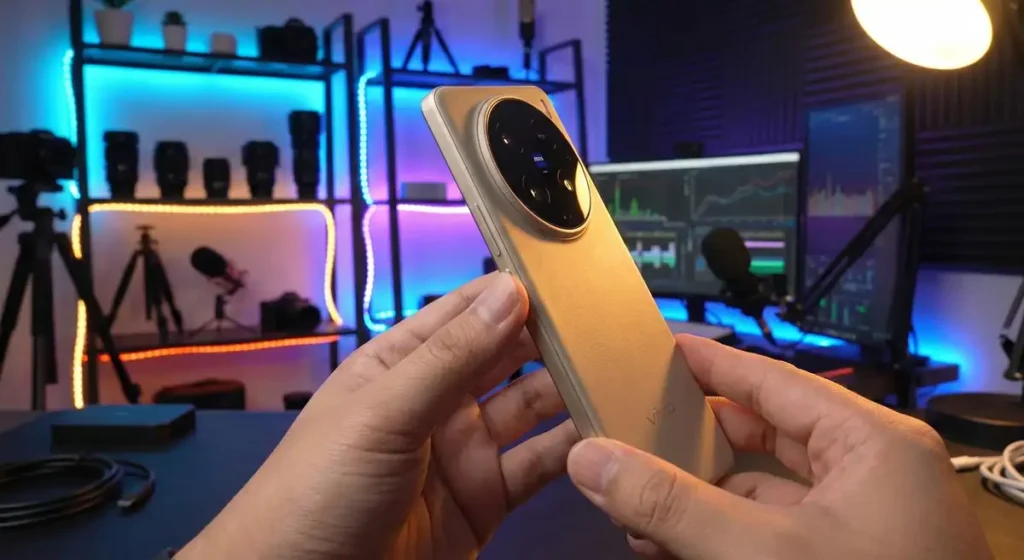
The X300 Pro looks and feels like a true flagship, with a curved glass front, frosted glass back, and a polished metal frame. At about 161.2 × 75.5 × 8 mm and 226 g, it has a reassuring heft without being excessively bulky.
Key design notes:
- IP68 and IP69 ratings protect against dust, immersion, and even high‑pressure water jets.
- Scratch/drop‑resistant glass on the front and a large circular camera island on the rear add both durability and visual character.
- Available in multiple colors (Black, Blue, White, Brown globally, with region‑specific names like Dune Brown or Summit Red), letting buyers pick a more subtle or bold finish.
The design clearly signals a camera‑centric device without going overboard, which should help click‑through for users specifically hunting for a “camera phone” in search results.
Display Quality and Day‑to‑Day Experience
On the front, the Vivo X300 Pro features a 6.78‑inch LTPO AMOLED with 1260 × 2800 resolution (~452 ppi), 120 Hz variable refresh, and around 91.6% screen‑to‑body ratio. It supports HDR10+, Dolby Vision, 100% P3 color, and can hit an impressive 4500 nits local peak brightness for outdoor visibility.
Notable display‑related Vivo X300 Pro Features:
- LTPO tech allows adaptive refresh from low Hz up to 120 Hz, improving battery life when viewing static content.
- Triple eye‑protection modes help reduce eye strain over long reading or scrolling sessions.
- Punch‑hole cut‑out is small and centrally placed, minimizing distraction during media and gaming.
For binge‑watching HDR content or gaming, this panel ranks among the best in the 2025 flagship class.
Performance, Software, and Long‑Term Support
Under the hood, Vivo uses MediaTek’s Dimensity 9500 platform paired with up to 16 GB LPDDR5X RAM and 512 GB UFS 4.1 storage. Reviews and early benchmarks place it in the same ballpark as the latest Snapdragon 8‑series chips for CPU and GPU performance.
Performance and software highlights:
- CPU clocked up to 4.21 GHz with Arm G1‑Ultra GPU for console‑grade graphics in supported titles.
- Vapor‑chamber liquid cooling keeps performance stable in long gaming and 8K recording sessions.
- Ships with Android 16 and OriginOS 6 / Funtouch OS, featuring refined animations, granular privacy controls, and tools like AI SuperLink for network optimization.
- Vivo claims OS updates for up to 5 years and security patches for up to 7 years, putting it in an elite group for longevity.
From a “how to choose” perspective, this means the Vivo X300 Pro Specs are not only powerful today but structured for long‑term reliability, which is key for buyers planning to keep the phone for 3–5 years.
Battery Life and Charging
The 6510 mAh battery is one of the headline Vivo X300 Pro Features, especially considering the slim profile. Thanks to LTPO and software optimizations, real‑world use tests show more than a full day of mixed 5G, camera, and media usage.
Charging and endurance:
- 90 W wired FlashCharge refills the phone from low to full in roughly 35–40 minutes under typical conditions.
- 40 W wireless FlashCharge plus reverse wired charging supports accessories on the go.
- Intelligent charging modes reduce wear by avoiding unnecessary 100% fast charges when left on the charger overnight.
If battery anxiety is a concern, this setup is a major plus, particularly compared with competitors that stay under 5500–6000 mAh.
Deep Dive Into the Vivo X300 Pro Camera
The camera is where this phone justifies its flagship pricing. If you are primarily searching for Vivo X300 Pro Camera performance, this section is where to focus.
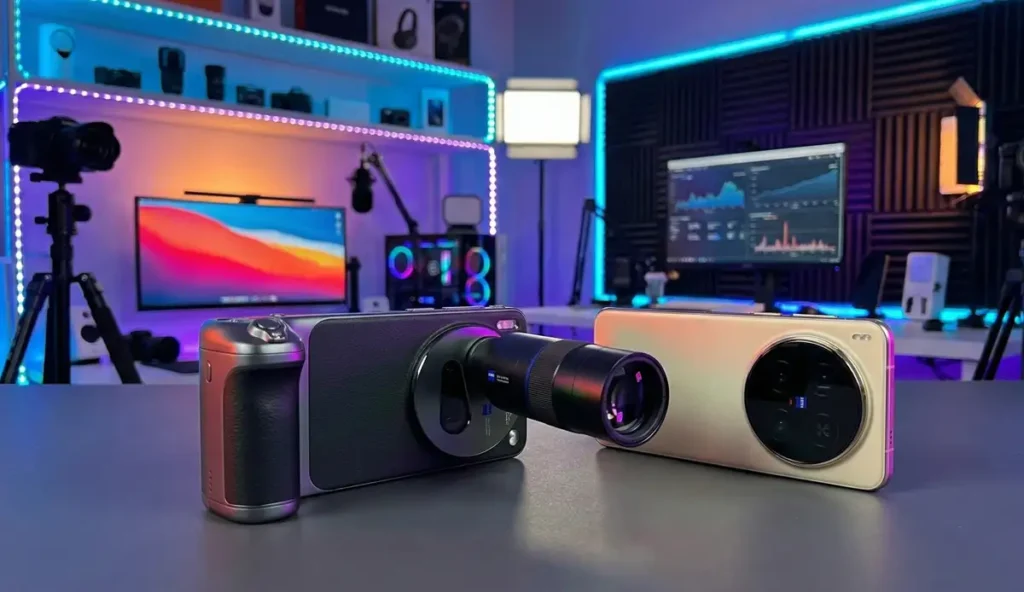
Camera Hardware Overview
Rear camera system (triple):
- 50 MP main (wide)
- Sony LYT‑828 sensor, 1/1.28″, 1.22 µm pixels.
- f/1.6 aperture, OIS, PDAF, laser autofocus.
- ZEISS T* coating and gimbal‑class stabilization (CIPA 5.5).
- 200 MP telephoto (periscope)
- 50 MP ultra‑wide
Front camera (single):
This sensor combo means you get high resolution at every focal length, which is rare even among top flagships.
Computational Photography: V3+ and ZEISS Tuning
Hardware is only part of the story. Several defining Vivo X300 Pro Features lie in computing:
- V3+ imaging chip: Offloads tasks like multi‑frame HDR fusion, Night mode stacking, and motion de‑ghosting, resulting in cleaner low‑light output and better dynamic range.
- ZEISS color science and portrait styles: Custom profiles deliver more natural skin tones and realistic bokeh simulations inspired by ZEISS glass, including dedicated portrait focal lengths.
- Advanced modes: Telephoto Bird Shots, ZEISS Mirotar Telephoto Style Bokeh, AI Storyboard, 3D LUT import for creators who want film‑like looks straight from the device.
For users who want a “How to shoot better” experience, the phone effectively guides them through pro‑style modes without forcing manual tinkering.
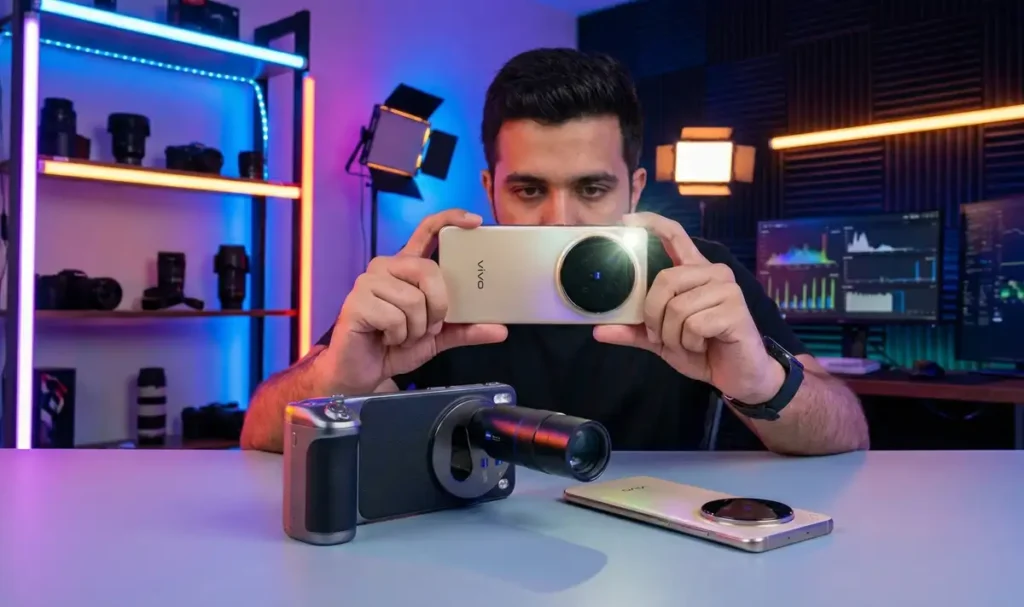
Still Photography Performance (Real‑World)
Early reviews and camera samples highlight three key strengths:
- Low‑light and night scenes:
- Main sensor captures bright yet controlled shots with good detail and restrained noise.
- Telephoto remains surprisingly usable at night thanks to the large sensor and OIS.
- Zoom and telephoto:
- Portraits:
Overall, the Vivo X300 Pro Camera system genuinely competes for “best camera phone of 2025,” especially for telephoto and portraits.
Video Quality and Creator Features
- Rear: up to 8K@30 fps, plus 4K@60 fps and 1080p high‑frame‑rate options.
- Front: up to 4K@60 fps, ideal for vloggers.
- OIS + EIS combine to keep footage stable, even when walking.
Creator‑focused tools include:
- Pro video mode with manual controls over shutter, ISO, white balance and focus.
- Log‑like color profiles (from V3+ pipeline) and support for LUTs, letting advanced users create a consistent “look” across content.
If you are planning a “How to shoot cinematic video with Vivo X300 Pro” article or YouTube video later, these features will be core talking points.
Connectivity, Audio, and Extras
The connectivity and extra features round out the Vivo X300 Pro Specs:
- Dual‑SIM 5G with wide global band coverage, VoLTE and VoNR.
- Wi‑Fi across 2.4/5/6 GHz bands, Bluetooth 6.0 with aptX HD, USB‑C 3.2, NFC, IR blaster, full GNSS suite including NavIC for India.
- In‑display ultrasonic fingerprint scanner and face unlock.
- Stereo speakers with Hi‑Res audio support and an X‑axis linear motor for tight, precise haptics.
The lack of a 3.5 mm jack will bother some audio enthusiasts, but this is standard across most 2025 flagships.
Vivo X300 Pro Price and Availability (India, USA, Europe)
Vivo X300 Pro Price varies by region, but clearly sits in the ultra‑premium bracket:
- India:
- Europe:
- USA (import/online):
When reading about Vivo X300 Pro Price, always factor in region‑specific incentives, especially in India, where bank cashback and exchange schemes can significantly lower the effective cost.
Vivo X300 Pro vs Key Competitors: Specs and Cost
To understand value, it helps to compare Vivo X300 Pro Features and pricing with close competitors like Xiaomi 15T Pro and iQOO 15.
Comparison: Vivo X300 Pro vs Xiaomi 15T Pro vs iQOO 15
| Feature | Vivo X300 Pro | Xiaomi 15T Pro (approx) | iQOO 15 (approx) |
|---|---|---|---|
| SoC | Dimensity 9500 | Dimensity 9400+/Snapdragon class | Snapdragon 8‑series flagship |
| RAM / Storage | 16 GB / 512 GB (UFS 4.1) | up to 16 GB / 512 GB | up to 16 GB / 512 GB |
| Display | 6.78″ 1.5K LTPO, 120 Hz, 4500 nits | ~6.7–6.8″ 1.5K LTPO, 144 Hz, lower nits | 6.78″ 1.5K LTPO, 144 Hz |
| Main Camera | 50 MP LYT‑828, OIS, gimbal‑grade | 50 MP main, OIS | 50 MP main, OIS |
| Telephoto | 200 MP ZEISS APO, 3.5x + extender kit | 10–12 MP 3–5x periscope (typical) | 64/50 MP shorter telephoto |
| Ultra‑wide | 50 MP AF | 50 MP | 50 MP |
| Front Camera | 50 MP 4K | 32 MP | 16–32 MP |
| Battery | 6510 mAh, 90 W / 40 W | ~5500–5800 mAh, 90 W / 50 W | ~5500–6000 mAh, very fast wired |
| OS & Updates | Android 16, up to 5 years OS | Android 16, 3–4 years OS | Android 16, 3–4 years OS |
| India Price (top) | ~₹1,09,999 | ~₹80,000–₹90,000 equivalent | ~₹60,000–₹75,000 |
Data sourced by aggregating multiple spec listings and comparison tools.
In short:
- Vivo wins for camera hardware, battery capacity, and long‑term update promise.
- Xiaomi 15T Pro and iQOO 15 aim at slightly lower price points with gaming‑oriented or performance‑first tuning.
If your priority is a “camera phone first, gaming phone second,” the Vivo X300 Pro Specs make a stronger case despite the premium pricing.
How to Decide if the Vivo X300 Pro Is Right for You
Use this mini decision guide:
- Choose Vivo X300 Pro if:
- You care most about telephoto, low‑light, and portrait photography.
- You want big‑battery endurance and are okay paying flagship pricing.
- You value long‑term OS/security support and premium build quality.
- Consider competitors if:
- You mainly game and want the absolute highest refresh rate for less money.
- You prefer lighter devices or smaller screens.
- You want to save ₹20,000–₹30,000 (or equivalent) and can compromise on camera versatility.
This is where the full package of Vivo X300 Pro Features, especially the camera and battery, either fully align with your usage or feel like overkill.
FAQs: Vivo X300 Pro (Trending Questions)
Yes. The combination of a 50 MP gimbal main sensor, 200 MP ZEISS APO telephoto, 50 MP ultra‑wide, V3+ imaging chip, and ZEISS tuning makes it one of the strongest camera phones for both daylight and low‑light shooting in 2025.
The main 16 GB + 512 GB variant of the Vivo X300 Pro is priced around ₹1,09,999 at launch, with effective prices lower after offers and exchange deals.
With 6510 mAh capacity and LTPO display, most users get a full heavy day or even 1.5 days of mixed usage, including 5G, camera, and streaming.
Yes, it supports 40 W wireless FlashCharge along with 90 W wired FlashCharge and reverse wired charging for accessories.
Vivo advertises up to 5 years of OS updates and 7 years of security patches for the X300 Pro, matching or exceeding most rivals in its class.
The device carries IP68 and IP69 ratings, which means it is protected against dust, immersion, and high‑pressure water jets under defined conditions.
Compared to iQOO 15 and Xiaomi 15T Pro, the Vivo X300 Pro offers a more advanced camera package, a bigger battery, and longer support, while the others typically cost less and prioritize higher refresh gaming or slightly different performance tuning
Conclusion: Is Vivo X300 Pro Worth It?
Overall Verdict
The Vivo X300 Pro is a camera‑first flagship that successfully backs its marketing claims with genuine hardware and software innovation. Between the 200 MP ZEISS telephoto, gimbal main sensor, V3+ chip, huge 6510 mAh battery, and long‑term software support, the Vivo X300 Pro Features make it one of the most complete Android flagships of late 2025.
Who Should Buy It
If you are a mobile photography enthusiast, content creator, or power user who values camera versatility, telephoto reach, battery life, and durability over shaving a few milliseconds off gaming benchmarks, the X300 Pro is easy to recommend despite the premium Vivo X300 Pro Price. For buyers in India, the USA, and Europe who prioritize imaging above all else, it deserves to be on your shortlist.
Also Read: