

Table of Contents
OnePlus 15R vs OnePlus 13R is a classic performance-and-battery refresh where the 15R brings a faster Snapdragon 8 Gen 5, a bigger 7,400 mAh battery and newer AI features, while keeping a very similar camera setup to the 13R. For heavy gamers, power users and long-term buyers, the OnePlus 15R is usually the better buy, but if you already own the 13R, upgrading makes sense only if you care a lot about gaming performance, battery life and new software features rather than camera quality.
OnePlus 15R vs OnePlus 13R: Quick Overview
- OnePlus 15R is the newer “performance-first” R-series phone with Snapdragon 8 Gen 5, a massive 7,400 mAh battery, OxygenOS 16, and upgraded AI features.
- OnePlus 13R offers Snapdragon 8 Gen 3 power, solid cameras, and 4 years of OS + 6 years of security updates with OxygenOS 15/16, and now sells at a lower street price.
- Both focus on fast displays, big batteries, and long software support, but the OnePlus 15R vs OnePlus 13R gap is now mainly in performance, battery endurance, AI features and charging efficiency, not raw camera sensors.
Design, Build, and Display
The OnePlus 15R vs OnePlus 13R design story is subtle: both are premium metal-and-glass slabs, but the 15R gets a more refined look with better durability and a faster screen.
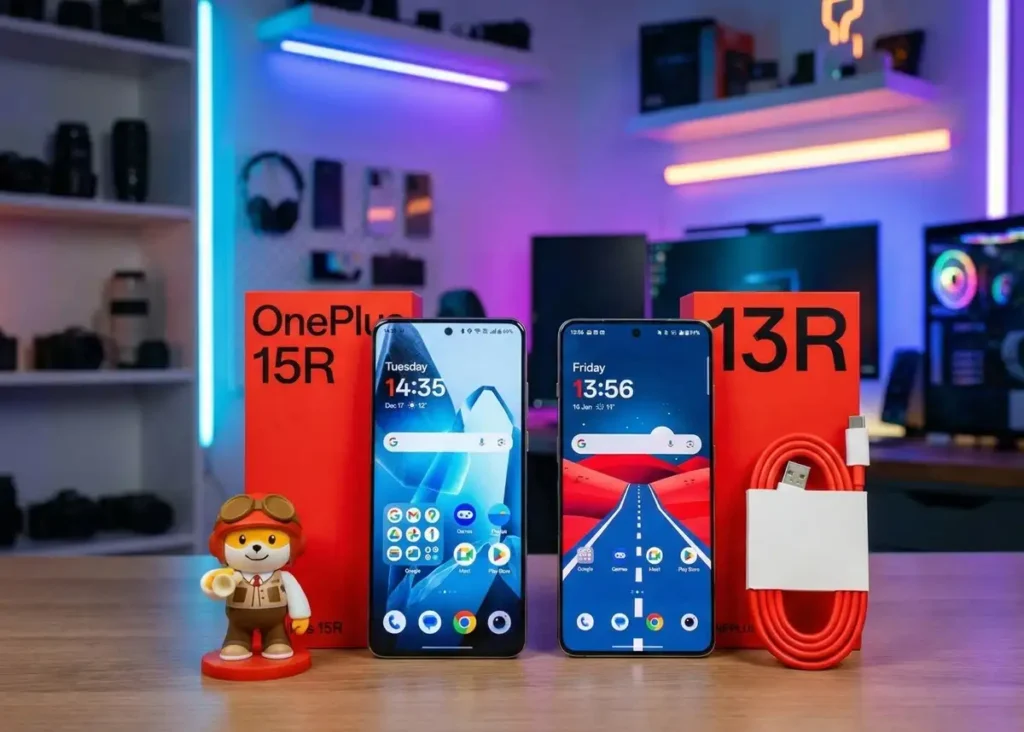
Design and durability
- OnePlus 15R introduces a refreshed camera module, tighter curves and improved IP69K water and dust resistance, matching the flagship OnePlus 15 for ruggedness.
- The 13R already felt premium but did not reach IP69K; 15R’s tougher rating is a practical upgrade if you are in rainy climates or use your phone outdoors a lot.
- OnePlus has also moved from the classic Alert Slider to a new Plus Key on the 15R, which you can map to actions like camera shortcut or Do Not Disturb toggle.
Display: refresh rate and quality
- OnePlus 15R packs about a 6.8–6.83‑inch AMOLED panel with up to 165 Hz refresh rate (region-dependent), making it smoother for gaming and scrolling than the 120 Hz panel on the 13R.
- Resolution is still around Full HD+ territory on both, but the 15R’s higher refresh rate, better touch response, and tuned brightness give it an edge for gaming and outdoor visibility.
- HDR support and color calibration are similar, but motion handling on the OnePlus 15R vs OnePlus 13R feels clearly more fluid, which matters for fast-paced shooters and social media.
If display smoothness and ruggedness are priorities, the OnePlus 15R clearly wins this part of the OnePlus 15R vs OnePlus 13R specs comparison.
Camera Deep Dive: OnePlus 15R vs OnePlus 13R Camera
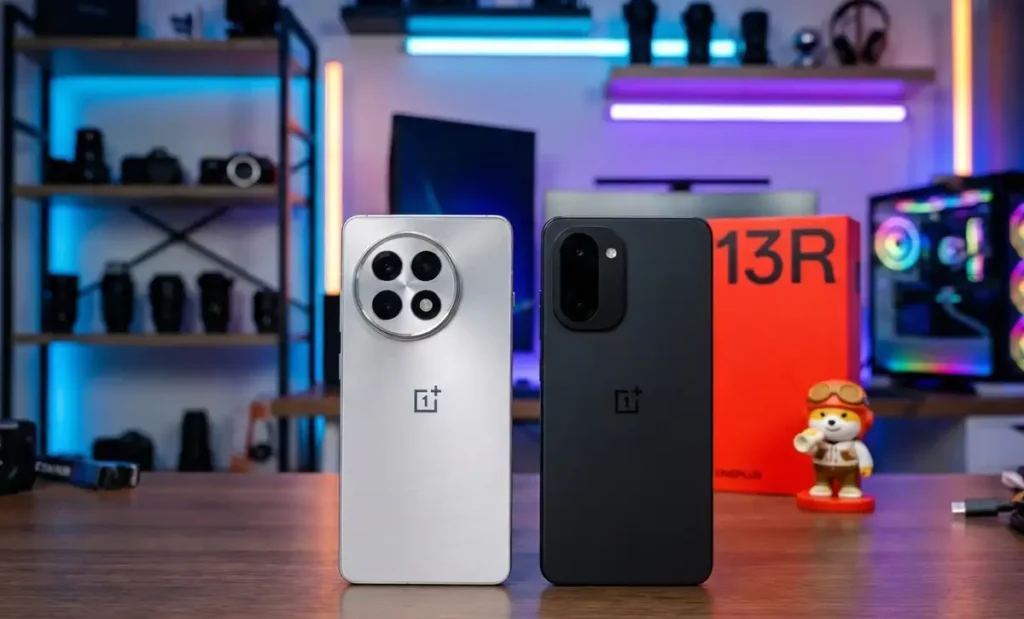
On paper, the OnePlus 15R vs OnePlus 13R camera hardware looks surprisingly similar, but the 15R leans harder on computational photography with DetailMax Engine, Ultra Clear Mode, and improved night algorithms.
Rear camera hardware
- Both phones use a 50 MP Sony IMX906 (also marketed as LYT‑700) main sensor with OIS, a 1/1.56‑inch type unit that OnePlus has used on multiple models.
- Ultra-wide stays at 8 MP on the 15R with the Sony IMX355 sensor (112° field of view, f/2.2), similar to the 13R’s ultrawide setup.
- There is no dedicated telephoto on either device; both rely on in-sensor crop and AI upscaling for 2x–3x zoom shots.
From a pure lens and sensor standpoint, the OnePlus 15R vs OnePlus 13R camera hardware is almost a lateral move rather than a radical upgrade.
DetailMax Engine and 26 MP mode (15R)
- The OnePlus 15R introduces a DetailMax Engine that prioritizes texture and micro‑contrast, enabling a 26 MP shooting mode that uses smarter pixel binning and sharpening.
- In good light, the 26 MP mode delivers more natural, film‑like detail, with better foliage separation and less watercolor effect compared to typical 12 MP bins.
- This mode only kicks in under well‑lit conditions; in darker scenes the phone falls back to standard outputs to avoid noise and motion blur.
For enthusiasts who pixel‑peep, this is the biggest practical difference in OnePlus 15R vs OnePlus 13R camera behavior in daylight.
HDR, color science, and night mode
- Ultra Clear Mode on the 15R fuses multiple HDR frames for punchier dynamic range, more controlled highlights and richer textures, especially in high‑contrast scenes.
- Clear Night Engine on the 15R produces brighter low‑light shots with more accurate colors and better noise control compared to earlier R‑series tuning used on the 13R.
- Color tuning remains slightly saturated but pleasing to social-media users, and the 15R benefits from the newer ISP in Snapdragon 8 Gen 5 for faster multi‑frame stacking.
In night and HDR, OnePlus 15R vs OnePlus 13R differences show more in consistency and processing speed than in raw hardware.
Video features and quality
- OnePlus 15R is marketed as the “segment’s first 4K 120 FPS” video phone, giving creators more flexible slow motion and smooth cinematic motion.
- The 50 MP main sensor records detailed 4K clips with good stabilization through OIS + EIS, and the improved chipset helps with lower rolling shutter and steadier framerates.
- The 13R can already do high‑quality 4K video, but lacks the same 4K 120 FPS push and the extra processing overhead of the 8 Gen 5, making the 15R better for content creators.
For “OnePlus 15R vs OnePlus 13R Camera” in video, the 15R pulls ahead thanks to frame‑rate flexibility and more robust stabilization pipelines.
Front camera and selfies
- OnePlus 15R features a 32 MP front camera (GalaxyCore GC32E2) with autofocus, which is a first for the R‑series, improving sharpness and focus reliability for selfies and group shots.
- The autofocus on the 15R front camera helps at varying arm lengths and in low light, cutting down on soft faces that earlier fixed-focus 13R selfies sometimes suffered.
- Skin tones and background separation in portrait mode are slightly improved on the 15R thanks to updated portrait algorithms tied to the newer ISP and OxygenOS 16 camera tuning.
If selfies and video calls matter a lot, the OnePlus 15R vs OnePlus 13R camera comparison tilts strongly in favor of the 15R.
Performance and Gaming
Performance is where the OnePlus 15R vs OnePlus 13R debate becomes much clearer, thanks to the jump from Snapdragon 8 Gen 3 to Snapdragon 8 Gen 5.
Chipset and raw power
- OnePlus 15R uses Qualcomm Snapdragon 8 Gen 5, a flagship‑class SoC with higher CPU and GPU scores, better AI throughput and improved efficiency compared to 8 Gen 3.
- OnePlus 13R runs Snapdragon 8 Gen 3, still a high‑end chip and plenty fast for almost every app, but it does trail in sustained GPU performance and AI workloads.
- In day‑to‑day use, both feel extremely smooth, but heavy titles and multitasking benefit from the 15R, especially when paired with 12 GB or more RAM.
Gaming and sustained performance
- The 165 Hz display and more powerful GPU on the 15R can push competitive games at higher frame rates where titles are optimized, making it a better choice for esports‑style gaming.
- Thermal management is improved on the 15R, allowing longer peak performance before throttling compared to the 13R’s 8 Gen 3 under extended load.
- For casual users, the difference in OnePlus 15R vs OnePlus 13R performance is less visible, but for gamers and power users, the 15R is clearly the more “future‑proof” option.
Battery, Charging and Endurance
Battery is another major pillar in the OnePlus 15R vs OnePlus 13R battery comparison, with the 15R introducing a noticeably larger cell while keeping fast charging.
Battery capacity and life
- OnePlus 15R comes with a huge 7,400 mAh battery, one of the biggest in its class, tuned to work with the efficient Snapdragon 8 Gen 5.
- The 13R already offered strong endurance, but its capacity is lower, making the 15R better suited for 120–165 Hz gaming, camera use and 5G streaming across a full day or more.
- Combined with OxygenOS 16 optimizations, the 15R comfortably handles a day and a half of mixed usage for most users, often more for light users.
Charging speed and battery health
- Both phones retain OnePlus’ signature fast wired charging (exact wattages differ by market but stay in the high‑wattage realm), giving near‑full charges in under an hour.
- The 15R also leverages newer battery health algorithms to reduce long‑term degradation, an important consideration if you want to keep the phone for 4–5 years.
- In practical “OnePlus 15R vs OnePlus 13R battery” usage, the 15R lasts longer per charge and ages better, making it the more reliable long‑term daily driver.
Software, Updates and AI Features
Software support is a key factor in the OnePlus 15R vs OnePlus 13R Software support debate, especially as long‑life updates become mainstream.
OxygenOS version and UX
- OnePlus 15R ships with OxygenOS 16 out of the box, built on the latest Android base and tuned for the 8 Gen 5 chipset.
- OnePlus 13R launched with OxygenOS 15 and has already begun receiving the OxygenOS 16 update, bringing many of the same features to existing users.
- OxygenOS remains fast and clean with smooth animations, and the 15R especially showcases this with its higher refresh display and powerful SoC.
Update policy and longevity
- OnePlus confirms that the OnePlus 13 and 13R will receive 4 major Android OS updates and 6 years of security patches.
- The 15R follows the same broad policy as the OP15: 4 years of major updates and 6 years of security updates, though still short of the 7‑year support from Google and Samsung.
- In the OnePlus 15R vs OnePlus 13R Software support matchup, both are strong, but the 15R simply starts one generation newer, so it will remain current for longer in calendar years.
AI and smart features
- The 15R includes OnePlus’ latest AI toolkit tied into OxygenOS 16, such as the Mind Space hub for storing screenshots and notes and running on‑device summarization and transcription.
- AI enhancements also power camera features like scene detection, portrait segmentation and low‑light optimization more aggressively on the 15R than the 13R.
OnePlus 15R vs OnePlus 13R Price and Value
Pricing is critical when deciding between the OnePlus 15R vs OnePlus 13R in India, the USA and Europe, where launch prices differ and older models often drop quickly.
Launch and current pricing
- OnePlus 13R originally launched as a value‑flagship around the 13 series, positioned below the main OnePlus 13, with an aggressive price for Snapdragon 8 Gen 3.
- OnePlus 15R launches slightly higher due to its bigger battery, newer chipset and upgraded display, with India pricing indicating a premium over the old 13R launch tag.
- As of late 2025, the 13R typically sells with discounts on many online platforms, making it significantly cheaper and attractive to budget‑sensitive buyers.
Value analysis: Should you pay extra?
- If you game a lot, care about battery longevity and want the latest AI and camera processing tricks, the extra money for the 15R delivers tangible benefits.
- If you primarily browse, stream video and take occasional photos, the discounted 13R can still feel flagship‑level while saving you money.
- For most buyers in India, USA and Europe, the 15R is the better future‑proof option, but the “value king” title still often belongs to the 13R when street prices drop.
Full Specs: OnePlus 15R vs OnePlus 13R Specs
Below is a condensed specs table to visualize the differences between the OnePlus 15R and OnePlus 13R specs.
Is It Worth Upgrading from OnePlus 13R to 15R?
Upgrading from OnePlus 13R to 15R is not a universal “yes”; it depends strongly on how you use your phone day to day.
When the upgrade makes sense
Choose the OnePlus 15R if:
- You are a heavy gamer or power user and want the fastest Snapdragon 8 Gen 5 with a 165 Hz display.
- You need the longest possible battery life with a 7,400 mAh cell and plan to keep the phone for 3–4 years.
- You care about better selfie quality, 4K 120 FPS video and advanced computational modes like DetailMax and Clear Night Engine.
- You want the latest OxygenOS 16 experience and AI features from day one, plus the maximum calendar life of updates.
When you should keep or buy the 13R
Stick with or pick the OnePlus 13R if:
- Your 13R is still performing smoothly and you do not feel limited in gaming, camera or battery.
- You are more price‑sensitive and can get strong discounts on the 13R, making it a better value than the newer 15R in your region.
- You do not need 4K 120 FPS video, AF selfies or the absolute top‑end battery capacity; the 13R already has excellent performance and long support.
For most existing 13R users, upgrading is “nice to have” rather than essential, unless gaming, battery and newer camera processing are high priorities.
Final Verdict: Which One Should You Buy?
In the OnePlus 15R vs OnePlus 13R showdown, both phones are strong, but they target slightly different buyers.
- Pick OnePlus 15R if you want the most powerful R‑series phone with the best battery life, fastest display, advanced AI features and improved selfie/video capabilities, and you are okay paying a premium.
- Pick OnePlus 13R if you want near‑flagship performance, a similar rear camera experience, long software support and significantly lower pricing, especially in India, USA and Europe where discounts are common.
If you are choosing fresh today and budget allows, the OnePlus 15R is the smarter long‑term buy in India, USA, Europe and globally, while the 13R remains the budget‑friendly alternative that still feels fast and capable in 2025.
FAQs: OnePlus 15R vs OnePlus 13R
Yes, the 15R’s Snapdragon 8 Gen 5, 165 Hz display and better thermals make it the stronger gaming phone compared to the 13R’s 8 Gen 3 and 120 Hz panel.
Hardware is very similar with the same 50 MP IMX906 main sensor, but the 15R adds DetailMax Engine, Ultra Clear Mode, improved night algorithms and a 32 MP AF selfie camera, giving it an edge overall.
Both lines are slated for 4 major Android OS updates and around 6 years of security patches, though exact timelines may vary by region.
The 15R, with its 7,400 mAh battery and more efficient Snapdragon 8 Gen 5, generally offers longer screen‑on time and better endurance than the 13R.
Upgrade if you want a noticeably better gaming experience, longer battery life, improved selfies and new AI features; otherwise, the 13R is still strong enough to keep.
The 15R offers more features but costs more, while the 13R becomes a better value as its price drops in markets like India, USA and Europe.
The 15R, thanks to its newer chipset, bigger battery, advanced camera processing and starting life on OxygenOS 16, is more future‑proof for users in India, USA, Europe and other regions.
Also Read: